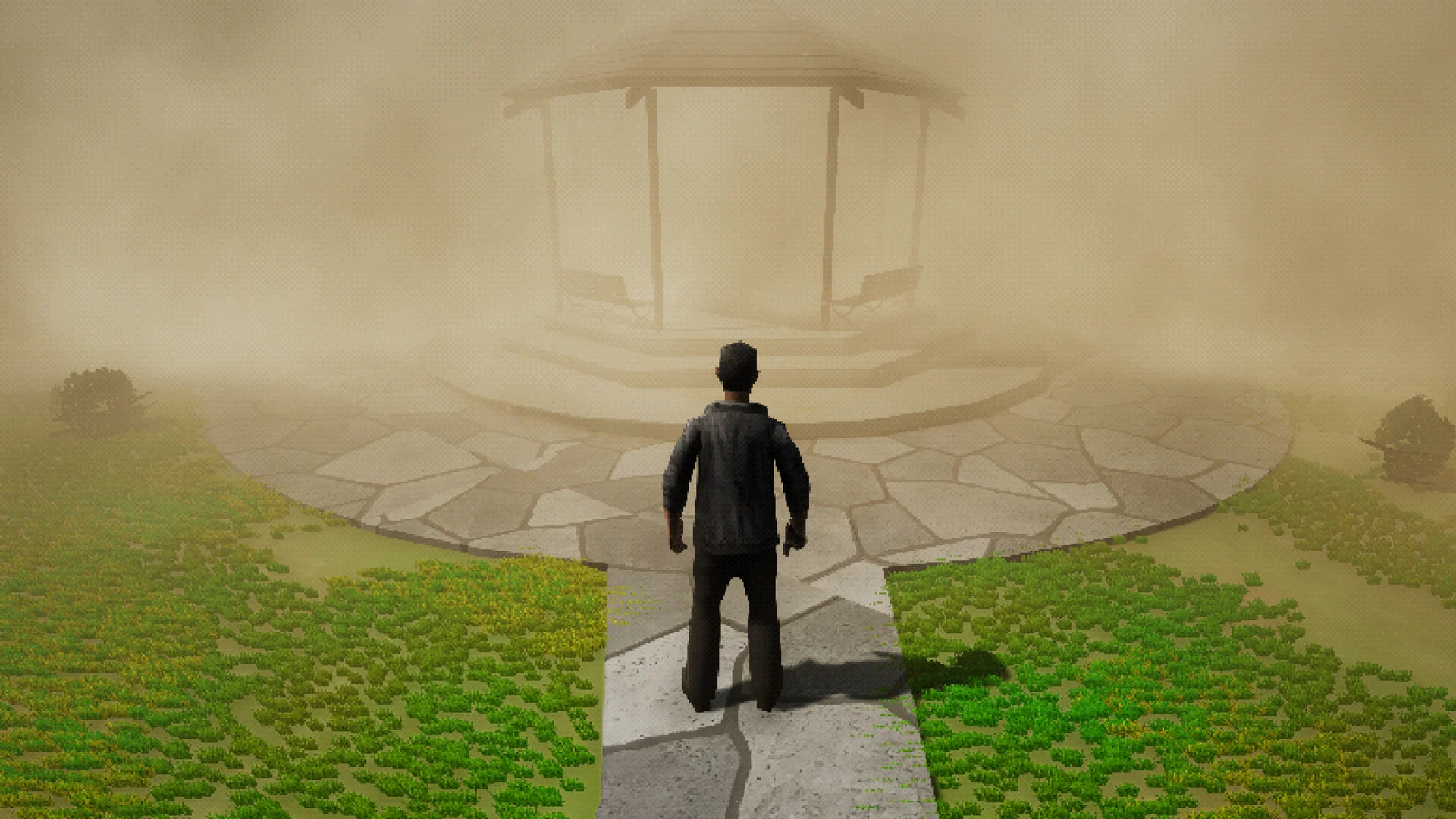
- Sarab how to fight: Combat is tense and punishing — most encounters are better avoided than won.
- Stealth first: Crouch-walking and sound awareness reduce detection and prevent fights entirely.
- Save resources: Health items, keys, and consumables are limited; never burn them early.
- Save smart: Manual save before new areas and story beats to retry tough sequences.
- Listen: Audio cues like footsteps and breathing reveal threats before you see them.
How Combat Works in Sarab
Sarab is a psychological horror adventure, not an action game. Fighting is a last resort built around limited resources, slow movement, and environmental awareness. The game's Steam page confirms tense combat as a core pillar alongside exploration and environmental puzzles, which means encounters are designed to pressure you — not to be cleared like a shooter.
Most threats you face fall into a simple decision loop: can you avoid it, hide from it, or must you confront it? Getting this judgment right is the real combat skill in Sarab.
| Encounter Type | Threat Level | Recommended Response |
|---|---|---|
| Patrolling enemy in open corridor | High | Wait, observe patrol pattern, move during gaps |
| Enemy near a story objective | Medium | Stealth approach, crouch-walk, avoid sprinting |
| Ambush or scripted encounter | High | Retreat, find hiding spot, re-engage on your terms |
| Enemy blocking a locked door | Medium | Explore alternate routes or hidden paths first |
Sprinting through unfamiliar areas is the fastest way to die in Sarab. Noise attracts attention, and once detected, escaping an encounter costs far more resources than avoiding it.
Avoid, Hide, or Fight: The Decision Framework
Before every encounter, run through three questions in order. Fighting is always the last option, because consumables are scarce and health recovery is limited.
Avoid
- Best option whenever possible
- Use hidden paths and alternate routes
- Many locked doors open later
- Zero resource cost
Hide
- Use when avoidance fails
- Listen for patrol patterns first
- Crouch-walking cuts detection range
- Break line of sight, then reposition
Fight
- Last resort only
- Costs health items and consumables
- Pick your timing and positioning
- Retreat is always valid
Rooms change between visits. Before leaving any chapter location, do a second sweep — hidden routes and items often appear only after story events alter an area, and those routes can bypass dangerous encounters entirely.
Step-by-Step Encounter Handling
When a threat appears, follow this sequence. It works for patrol sequences, scripted ambushes, and enemies guarding objectives.
Stop and Listen
Freeze movement and listen for footsteps, doors, or breathing. Sound cues in Sarab reveal enemy position long before visuals do, so let audio map the threat for you.
Study the Patrol Pattern
Watch the threat's movement loop from cover. Note the gaps in its route — those gaps are your windows to move, not a signal to rush.
Move During Gaps, Crouched
Crouch-walk through open areas during patrol gaps. Never sprint across exposed ground unless you are already detected and breaking away.
Break Line of Sight
If detected, retreat behind cover and break line of sight immediately, then change direction. Straight-line escapes usually fail.
Re-Approach or Bypass
Once the threat resets, either re-approach with stealth or look for a hidden path around the encounter. Reloading a recent save is faster than replaying a chapter.
Resource Management for Survival
Combat in Sarab is as much about inventory discipline as reflexes. Consumables are limited across the campaign, and wasting them on avoidable fights creates problems in later chapters where encounters are harder to sidestep.
| Resource | Best Use | Waste Trigger |
|---|---|---|
| Health items | After scripted damage or unavoidable fights | Topping off after avoidable encounters |
| Keys / openers | Progress-blocking doors only | Curiosity doors that open later anyway |
| Batteries / tools | Dark areas tied to objectives | Exploring fully lit optional rooms |
| Manual saves | Before new areas and big choices | Saving only at auto-checkpoints |
Players who finish Sarab's later chapters comfortably almost always share one habit: they treat every dangerous encounter as a puzzle to bypass, not a fight to win. Exploration and hidden paths solve more problems than combat does.
Combat Readiness Checklist
Before Every Dangerous Area:
- Create a manual save before entering
- Crouch and listen for audio cues before moving
- Identify at least one retreat route or hiding spot
- Check inventory for health items and key consumables
- Scan the environment for hidden paths around the threat
FAQ
Q: How do you fight enemies in Sarab?
Fighting in Sarab is a last resort. Focus on avoiding detection through crouch-walking, studying patrol patterns, and using hidden paths. When confrontation is unavoidable, position carefully, use consumables sparingly, and retreat to break line of sight whenever the fight turns against you.
Q: Can you skip combat encounters entirely?
Many encounters can be avoided or bypassed. The game features confirmed hidden paths and alternate routes, and several doors that seem locked open later after story events. Exploration is usually safer and cheaper than fighting.
Q: What is the best way to stay undetected?
Stop moving and listen for footsteps, doors, and breathing before crossing open areas. Crouch-walking drastically reduces detection range, and avoiding sprinting keeps you quiet. If adjustable, lowering in-game music makes audio cues easier to distinguish.
Q: What should I do if I keep dying in a stealth sequence?
Reload a recent manual save rather than replaying a long stretch, and save before entering dangerous areas so retries are quick. Watch the patrol pattern for a full cycle before moving, and only advance during the gaps you identify.