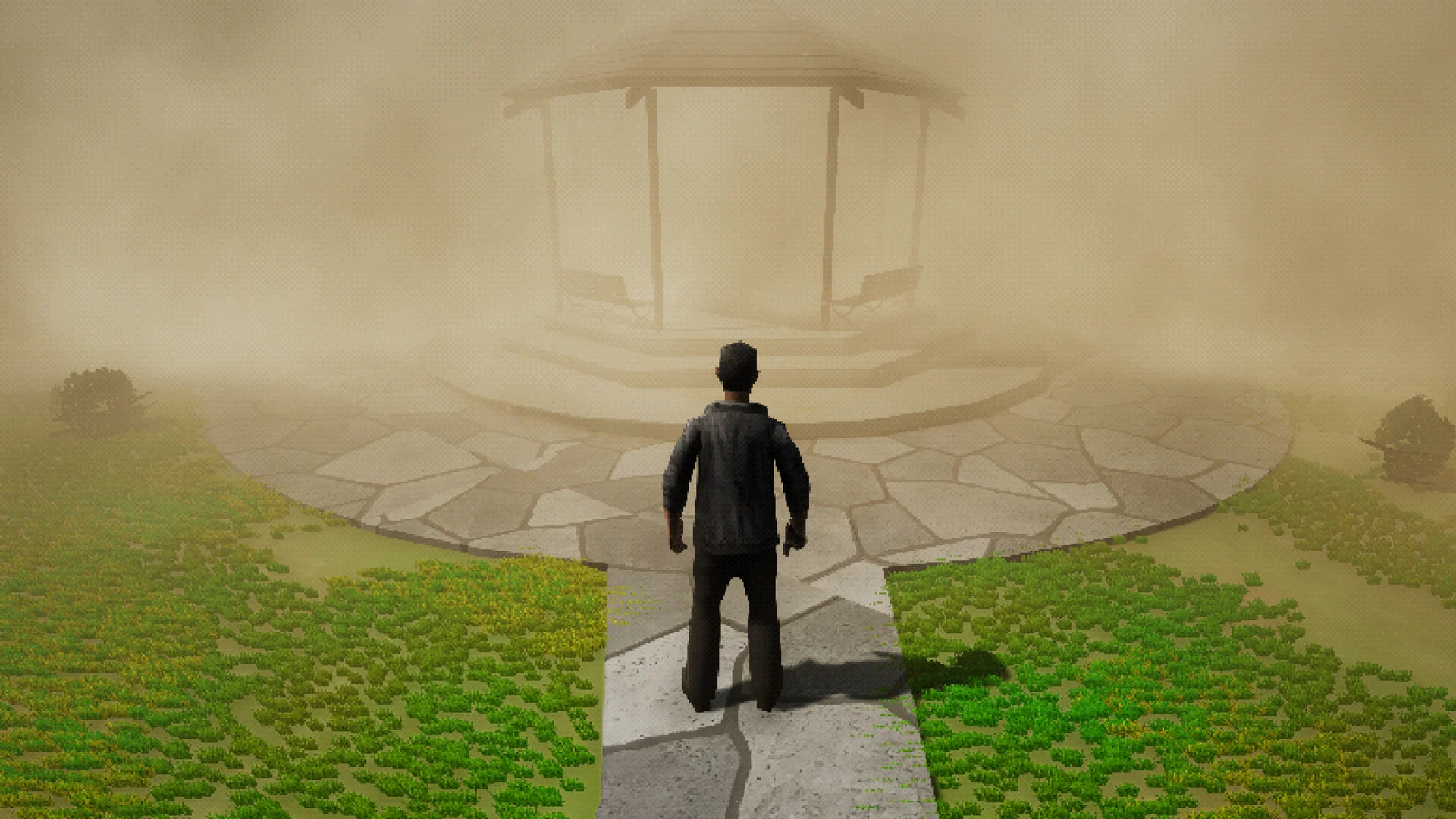
- Sarab protagonist: An outsider whose arrival in the desert region triggers the entire mystery.
- Story role: Their choices and observations determine which of the four endings you unlock.
- Core mechanic: The journal records clues that hint at the protagonist's next objective.
- Key theme: The mirage motif — what the protagonist sees may be real, illusion, or both.
- Best habit: Save before major dialogue choices, since they lock the story's direction.
Sarab Protagonist Overview
The Sarab protagonist is the lens through which the entire mystery unfolds. They arrive in the isolated desert region of Sarab expecting routine, and chapter by chapter, strange occurrences — noises, missing objects, unsettling encounters — force them to confront the truth behind the phenomena known as "Sarab," meaning mirage. The final chapters reveal which parts of their experience were real and which were illusion.
The game deliberately keeps the cast small, keeping the spotlight on the protagonist and the handful of figures they interact with. This design means every conversation the protagonist holds carries narrative weight: supporting characters each carry a piece of the truth, some offering warnings the player should heed while others actively obscure what happened.
Replaying early scenes with endgame knowledge recontextualizes many of the protagonist's conversations. If a first playthrough feels confusing, that is intentional — the story rewards a second look.
| Aspect | Detail |
|---|---|
| Role | Player-controlled outsider and sole viewpoint character |
| Arrival | Settles into what seems like a routine situation in the region |
| Core arc | Gradual discovery that the mirage phenomena hide the truth |
| Agency | Dialogue choices and discoveries shape the ending |
| Tools | Journal, collected clues, notes, and photographs |
The Protagonist's Journey: Chapter by Chapter
The protagonist's progression follows a clear five-stage structure, moving from arrival to revelation. Understanding this arc helps you anticipate when key decisions appear and when exploration matters most.
| Chapter | Protagonist's Objective | Key Decisions |
|---|---|---|
| Ch. 1 — Arrival | Explore the starting area, meet first characters, gather initial clues | Minimal; guided sequence |
| Ch. 2 — Desert Village | Talk to residents, complete small tasks, learn village history | Optional conversations reveal lore |
| Ch. 3 — Ancient Ruins | Solve environmental puzzles, record recurring symbols | Symbol notes matter later |
| Ch. 4 — Beneath the Sands | Descend into underground passages | Dialogue choices determine final sequences |
| Final — The Truth | Confront the final revelations | Accumulated choices set the ending |
Key decisions in Chapter 4 lock which final sequences become available. Save before descending into the underground passages so you can revisit major choices without replaying earlier chapters.
Early Chapters
- Observation-focused gameplay
- Clue-gathering drives progress
- Symbol recording pays off later
Mid-Game
- Puzzles test what the protagonist learned
- Village relationships deepen the mystery
- Hidden switches and light mechanics
Final Chapters
- All choices converge
- Real versus illusion is revealed
- Optional secrets unlock the true ending
How the Protagonist Shapes Each Ending
The protagonist is not a passive witness — their compassion, thoroughness, and curiosity directly determine the conclusion. Four endings exist, each tied to how the protagonist behaved along the way.
| Ending | Protagonist Behavior Required |
|---|---|
| Standard | Follow the main story with balanced choices, no major optional discoveries |
| Good | Make compassionate choices, help characters, uncover hidden truths early |
| Bad | Cold or self-serving choices, skip exploration, dismissive dialogue |
| Secret | Discover all major secrets in ruins and underground, then make aligned final choices |
Play Attentively in Early Chapters
Interact with every highlighted object, read notes, and complete side conversations. These actions plant the seeds for the Good and Secret endings.
Answer the Elder's Riddle Correctly
In Chapter 2, answer the village elder's riddle with "the road" (or "sand" in some translations). This earns an extra clue that helps unlock the secret ending.
Record Every Symbol
Glyphs from the ruins entrance, mirror chamber, underground passage, and elder's chamber recur in the final door sequence. Keep a real-world note of the order you first encountered them.
Make Aligned Final Choices
In the last chapter, choose options consistent with the compassionate, truth-seeking path to reach the Secret Ending — the most complete resolution of the protagonist's journey.
If you receive the normal ending, reload an earlier save rather than restarting completely. The Truth Seeker achievement path is far faster with a save placed before Chapter 4's key decisions.
Protagonist Survival and Exploration Habits
Sarab rewards patience and observation more than fast reflexes, and the protagonist's survival depends on smart habits rather than combat prowess. Dangerous encounters can often be avoided entirely instead of outlasted.
Search every room twice. Items and notes often appear only after story events change an area — a second sweep before leaving any location uncovers most hidden collectibles.
| Habit | Why It Matters for the Protagonist |
|---|---|
| Save often, save smart | Key decisions lock consequences; recent saves avoid long replays |
| Listen before moving | Sound cues reveal threats; crouch-walking reduces detection range |
| Manage resources | Consumables are limited; explore hiding spots before spending items |
| Read everything | Notes contain puzzle hints, safe codes, and danger warnings |
| Revisit locked doors | Many doors the protagonist assumes are permanent open later |
Protagonist Playthrough Checklist
Before committing to a full playthrough aimed at the Secret Ending and full completion, work through this checklist. It covers the milestones tied to the protagonist's achievements, including the missable ones.
Protagonist Completion Run:
- Examine every highlighted object for Keen Observer
- Complete all side conversations with supporting characters
- Record all four symbol locations in order
- Answer the elder's riddle correctly
- Discover all major secrets in ruins and underground areas
- Reach the true ending for Truth Seeker
Keen Observer, Collector, and Truth Seeker are all missable. Interact with everything, revisit rooms after story events, and keep saves before major decisions to avoid extra playthroughs.
Sarab Protagonist FAQ
Q: Who is the protagonist in Sarab?
The Sarab protagonist is an outsider who arrives in the isolated desert region and settles into what initially seems like a routine situation. Their small supporting cast each holds a piece of the truth, and the protagonist's choices determine which of the four endings the story reaches.
Q: Do the protagonist's choices actually matter?
Yes. Dialogue choices and certain actions influence the story's direction. Compassionate choices and thorough exploration lead toward the Good and Secret endings, while dismissive, self-serving choices trigger the Bad Ending. Key decisions in Chapter 4 lock which final sequences are available.
Q: Can the protagonist fail or die permanently?
Dangerous encounters can be failed, but manual saves let you retry quickly. The bigger risk is narrative: skipping exploration and optional interactions can lock you out of the Secret Ending and missable achievements like Truth Seeker and Collector.
Q: What does the mirage motif mean for the protagonist?
The word Sarab means mirage. Throughout the story, the protagonist experiences things that may not be real — and may fail to see things that are. The ending recontextualizes the entire journey, revealing which experiences were genuine and which were illusion.