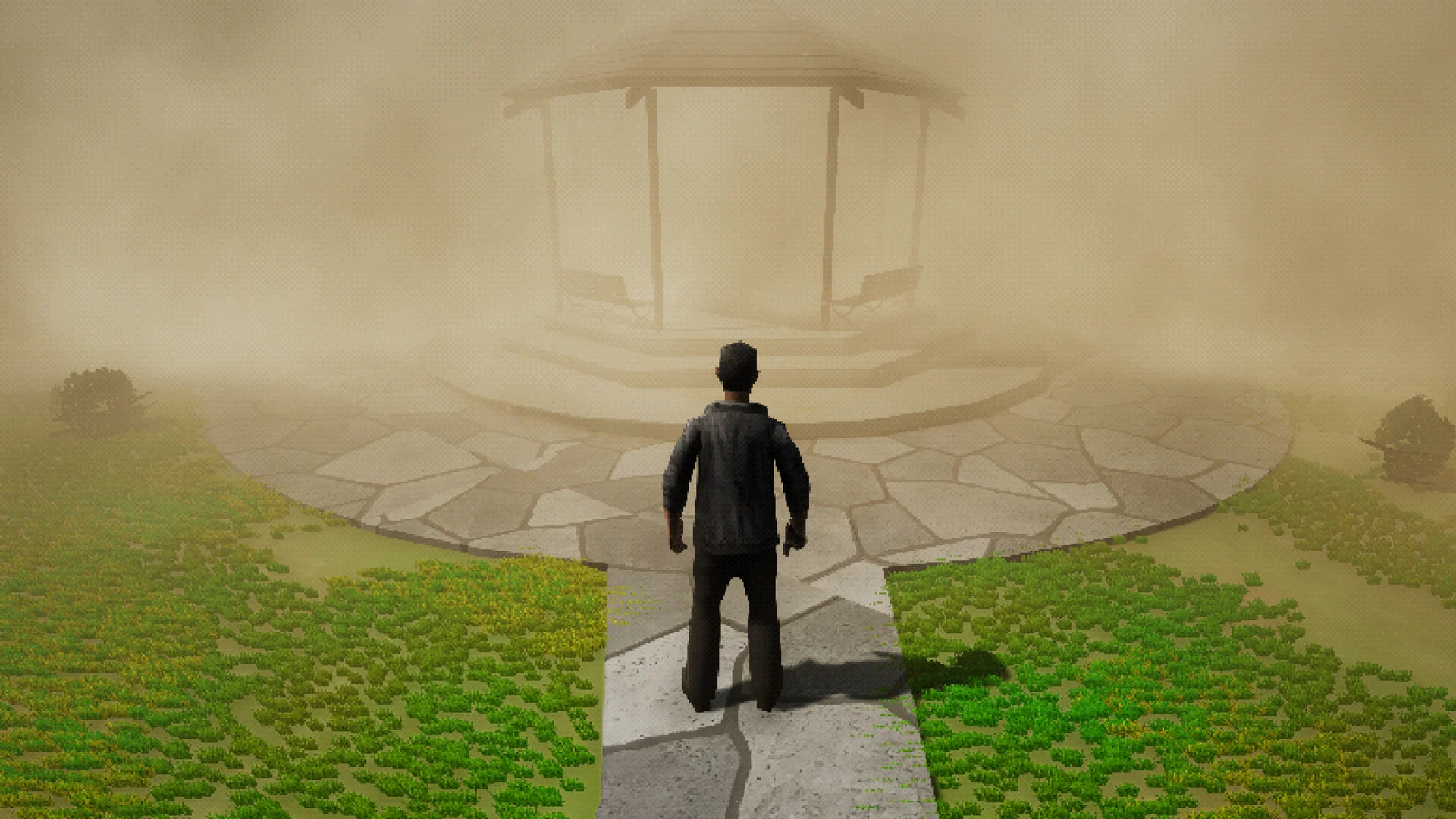
- Sarab story explained: A slow-burn psychological horror built on mystery, memory, and illusion.
- The title matters: "Sarab" means mirage — the line between real and unreal drives the plot.
- Environmental storytelling: Notes, photos, and room changes carry most of the hidden lore.
- Choices shape endings: Dialogue decisions and exploration depth determine your conclusion.
- Replay value: Early scenes read completely differently once you know the truth.
Setting and Background: The World of Sarab
Sarab is a story-driven psychological horror adventure set in an isolated, Middle-Eastern-inspired environment where everyday normalcy gradually gives way to unease. Rather than relying on jump scares, the game builds dread through quiet, deliberate pacing — planting clues about the true nature of the location long before the story confirms them.
The setting itself functions as a narrative device. Desert motifs, weathered architecture, and a muted, dusty palette reinforce the central theme: a mirage. Something that appears real but isn't — or worse, something real that fails to appear.
"Sarab" translates to "mirage." Keep this in mind from the opening chapter — nearly every major twist plays on the gap between what the protagonist perceives and what actually exists. Watching for this gap early makes the ending land far harder.
Main Story Timeline, Chapter by Chapter
The narrative begins with the protagonist arriving in the area and settling into what seems like a routine situation. Strange occurrences then accumulate chapter by chapter until the protagonist is forced to confront the truth behind the strange events. The table below summarizes each story beat and its significance.
| Chapter | Story Beat | What It Establishes |
|---|---|---|
| Chapter 1 — Arrival | Protagonist enters the region, meets first characters | Normalcy; early names and places that matter later |
| Chapter 2 — The Village | Conversations with residents reveal local history | The community knows more than it says |
| Chapter 3 — The Ruins | Symbol puzzles and sealed doors uncovered | The location's hidden past begins surfacing |
| Chapter 4 — Beneath the Sands | Underground passages; key dialogue choices | Reality starts unraveling; endings diverge here |
| Final Chapter — The Truth | Confrontation with final revelations | Which experiences were real, and which were illusion |
Establishing Normalcy
The opening chapters deliberately mimic routine life. Dialogue seems mundane, but early conversations contain setup for the central mystery — note every name and place mentioned.
Accumulating Wrongness
Noises, missing objects, and unsettling encounters stack up gradually. Each incident is individually dismissible; together they signal something deeply wrong.
Digging Into the Past
The ruins and their environmental puzzles expose fragments of the location's history — the first hard evidence that the "normal" surface is a facade.
Confronting the Mirage
The final chapters reveal which parts of the journey were real and which were illusion. Your accumulated choices determine which revelations become available.
The remaining sections discuss the story's deeper structure and endings in detail. If you want a blind first playthrough, bookmark this page and return after finishing Chapter 2.
Key Characters and Relationships
The cast is deliberately small, keeping the focus tightly on the protagonist and a handful of figures. Each supporting character carries a piece of the truth — some offer warnings the player should heed, while others actively obscure what happened.
The Protagonist
- Arrives as an outsider
- Perspective shapes the entire mystery
- Reliability as a narrator is questionable
The Warners
- Characters who hint at the truth
- Dialogue contains genuine clues
- Often ignored on a first playthrough
The Obscurers
- Actively hide what happened
- Redirect the protagonist's attention
- Recontextualized fully in the ending
A defining feature of Sarab's writing is that replaying early scenes with endgame knowledge changes the meaning of many lines. Dialogue that seemed like filler often contains direct references to the final revelations.
Don't skip optional conversations. Supporting characters' warnings frequently contradict each other — working out who is truthful and who is misleading you is one of the story's central puzzles.
Hidden Details and Symbolism
Environmental storytelling does the heavy lifting in Sarab. The deepest layers of the plot are never stated outright — they're embedded in the world itself.
| Storytelling Element | Where to Look | What It Reveals |
|---|---|---|
| Notes and documents | Drawers, tables, shelves | Puzzle hints, backstory, warnings |
| Photographs | Walls, hidden rooms | Relationships and events others deny |
| Room changes | Revisit areas after story beats | Things move or appear between visits |
| The mirage motif | Visuals and dialogue throughout | Real vs. illusion — the story's core theme |
| Recurring symbols | Ruins, underground, final door | A code connecting all chapters |
The mirage motif — seeing things that aren't there, or failing to see things that are — recurs consistently across both visuals and dialogue. Players who pick up on this pattern early consistently report a stronger reaction to the ending, because the conclusion reframes the entire journey through this lens.
Items and notes often appear only after story events change an area. Before leaving any location, do a second sweep — this habit uncovers most of the hidden lore that makes the final revelations coherent.
Endings Explained
Sarab features multiple endings shaped by your choices, discoveries, and how deeply you explore. The conclusion recontextualizes the protagonist's entire journey — and players who explore thoroughly understand the ending's implications far better than those who rush the main path.
| Ending | How to Reach It | What It Means |
|---|---|---|
| Standard Ending | Follow the main story with balanced choices | Surface-level resolution; most first-run players land here |
| Good Ending | Compassionate choices plus hidden lore items | The protagonist accepts the truth and acts on it |
| Bad Ending | Cold choices, skipped exploration | A darker reading where the mirage wins |
| Secret Ending | All major secrets found, aligned final choices | The most complete resolution of Sarab's story |
Checklist for the Fullest Story Experience:
- Talk to every supporting character in each chapter
- Collect all hidden lore items before the final chapter
- Record recurring symbols from the ruins onward
- Make compassionate choices when helping characters
- Revisit areas after major story events for new details
If you reach the normal ending but want the true ending, reload an earlier save rather than restarting completely — key optional interactions in earlier chapters are what unlock the final revelations.
Story FAQ
Q: What does the title Sarab actually mean?
Sarab translates to 'mirage.' It refers to the strange events at the heart of the plot and signals the story's central theme: the distinction between what is real and what is illusion. Nearly every major twist plays on this gap.
Q: Is the Sarab story explained through cutscenes or exploration?
Both, but exploration carries more weight. Environmental storytelling — notes, photographs, and changes in rooms between visits — delivers most of the hidden lore. Players who rush the main path will miss the details that make the ending coherent.
Q: Do dialogue choices actually change the story?
Yes. Choices influence the story's direction and help determine which ending you receive. Compassionate choices and helping key characters point toward the Good Ending, while dismissive choices and skipped exploration lead to darker outcomes.
Q: Should I replay the game after finishing the Sarab story?
A second playthrough is highly rewarding. Early dialogue and scenes read completely differently once you know the truth — many lines that seemed like filler are direct references to the final revelations.